
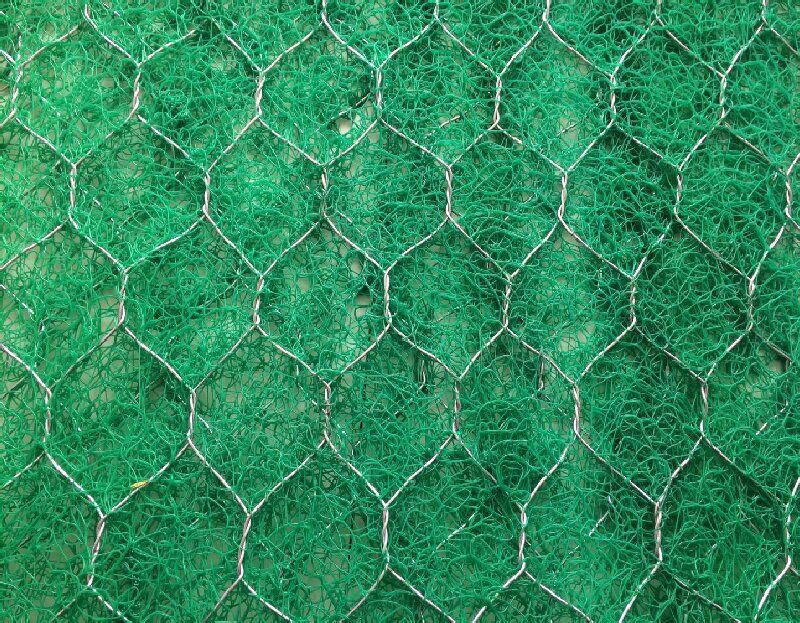
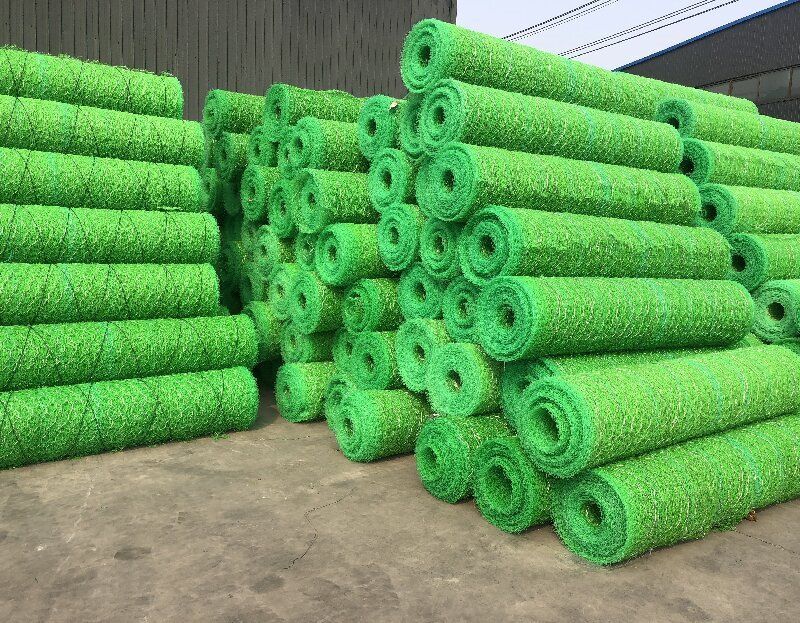
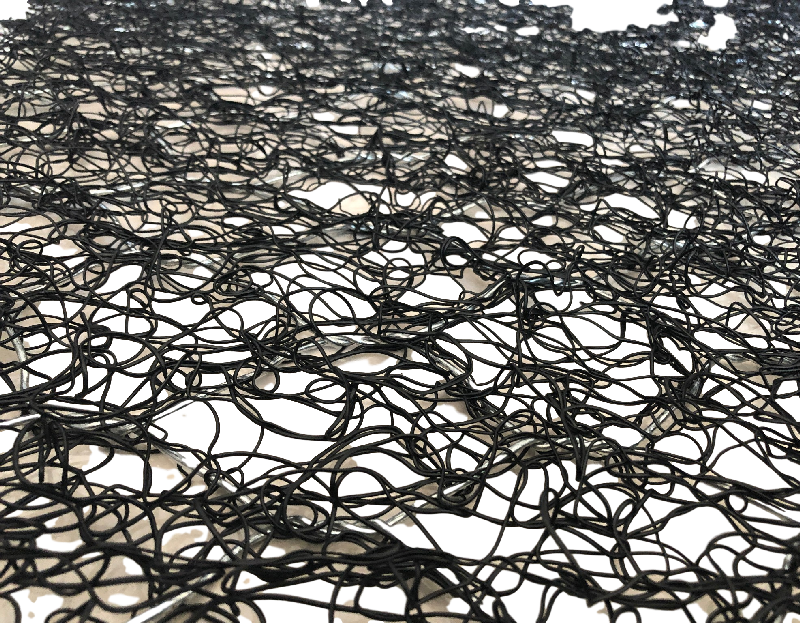
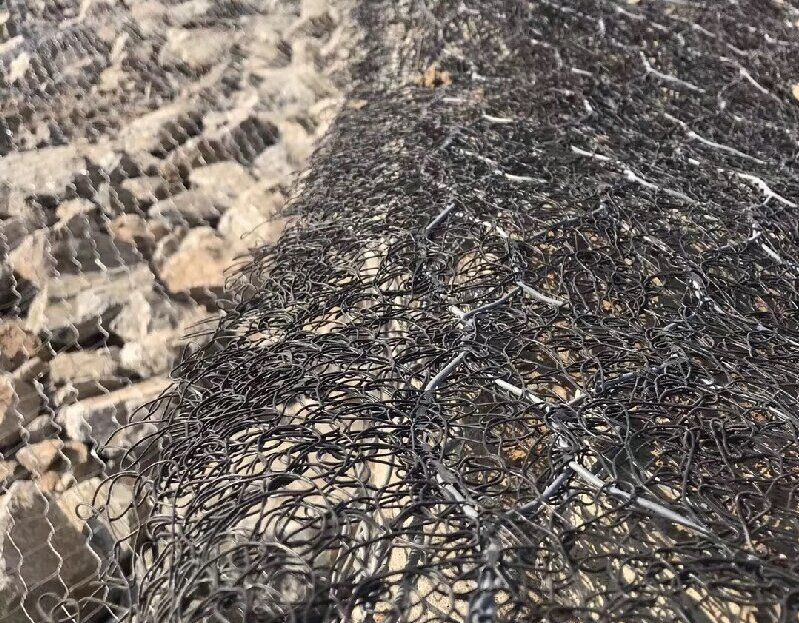
Mass per unit area:450g/m² Density: 900kg/m³ Mesh type:80X100 Wire diameter :2.7mm,2.7/3.7mm Geomat colour:Black/Green /Brown
Geomat Composite with Double Twisted Gabion Mesh
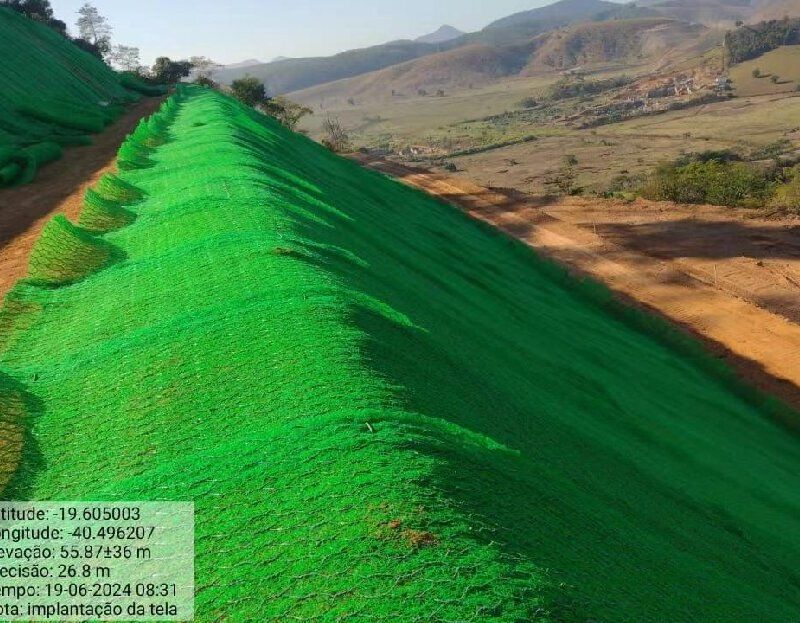
Geotextile Mat R turf reinforcement mat is a three-dimensional geocomposite. It is reinforced with a double twist steel wire mesh to provide tensile mechanical strength and erosion protection, ensuring the stability of roadways, embankments, drainage ditches, channels and other areas susceptible to erosion damages.
GeoMat R1 is a reinforced geomat made from a polymeric three- dimensional matrix extruded onto a double twisted steel wire woven mesh. The reinforcing hexagonal steel wire mesh has mechanical characteristics exceeding those in EN 10223-3. The wire is protected with (Zn95%-AI5%) galvanising in accordance with EN 10244-2, Class A.
Erosion Control – Effectively prevents soil erosion on slopes, riverbanks, and embankments by stabilizing the surface.
Soil Stabilization – Reinforces the ground, reducing soil displacement and increasing load-bearing capacity.
Vegetation Growth Support – Provides a suitable environment for plants to establish roots, enhancing natural stabilization.
Durability – Made from high-quality synthetic materials, offering long-term resistance to environmental factors.
Versatility – Can be used in various applications such as road construction, riverbank protection, and land rehabilitation.
Cost-Effective – Reduces maintenance costs by minimizing soil erosion and structural damage.
Eco-Friendly – Supports sustainable land management by promoting vegetation growth and reducing soil loss.
Agribusiness
Construction, Industry, Sports
Coastal and River Control Engineering
Emergencies and Floods
Environmental Protection
Mining
Oil & Gas/Energy
Transportation Infrastructure
Urban Infrastructure
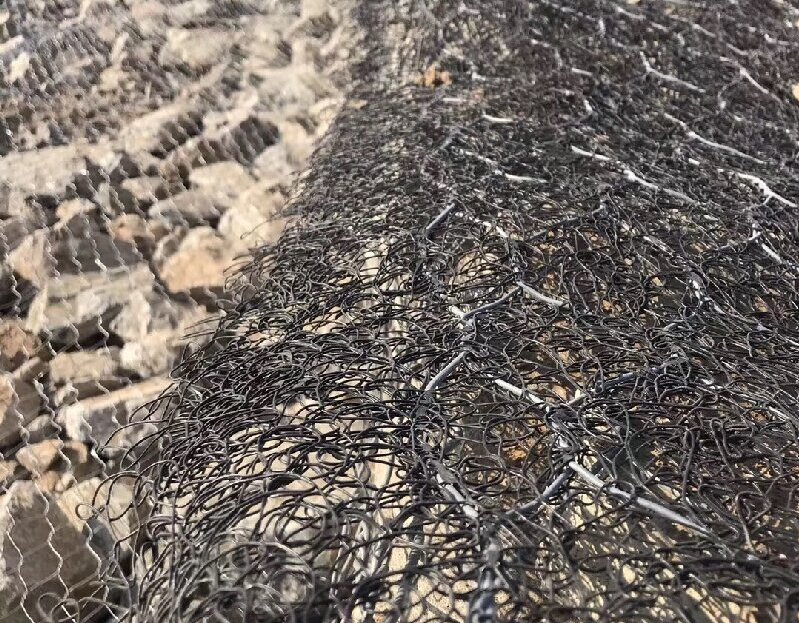
When constructing the following points should be taken into account:
1. Material Inspection: Before construction, carefully inspect the quality of the GEOMAT to ensure it is free from damage and contamination and meets the design requirements.
2. Construction Environment: Ensure that the construction site is level, dry, and free of waterlogging, and avoid construction under adverse weather conditions.
3. Foundation Treatment: Before laying the GEOMAT, the foundation should be leveled and compacted, removing any surface protrusions to ensure a flat foundation surface.
4. Laying Sequence: Lay the GEOMAT according to the sequence specified in the design drawings, ensuring that the laying direction of the GEOMAT aligns with the main load-bearing direction.
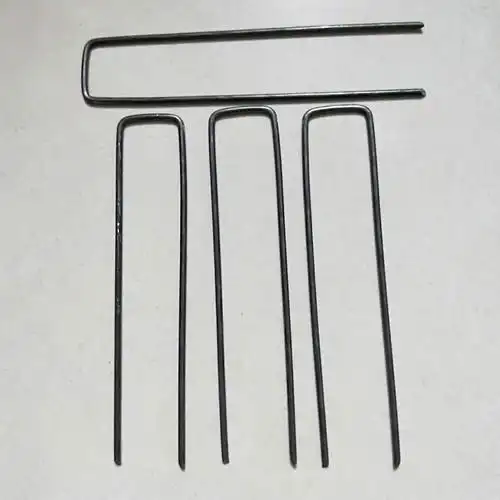
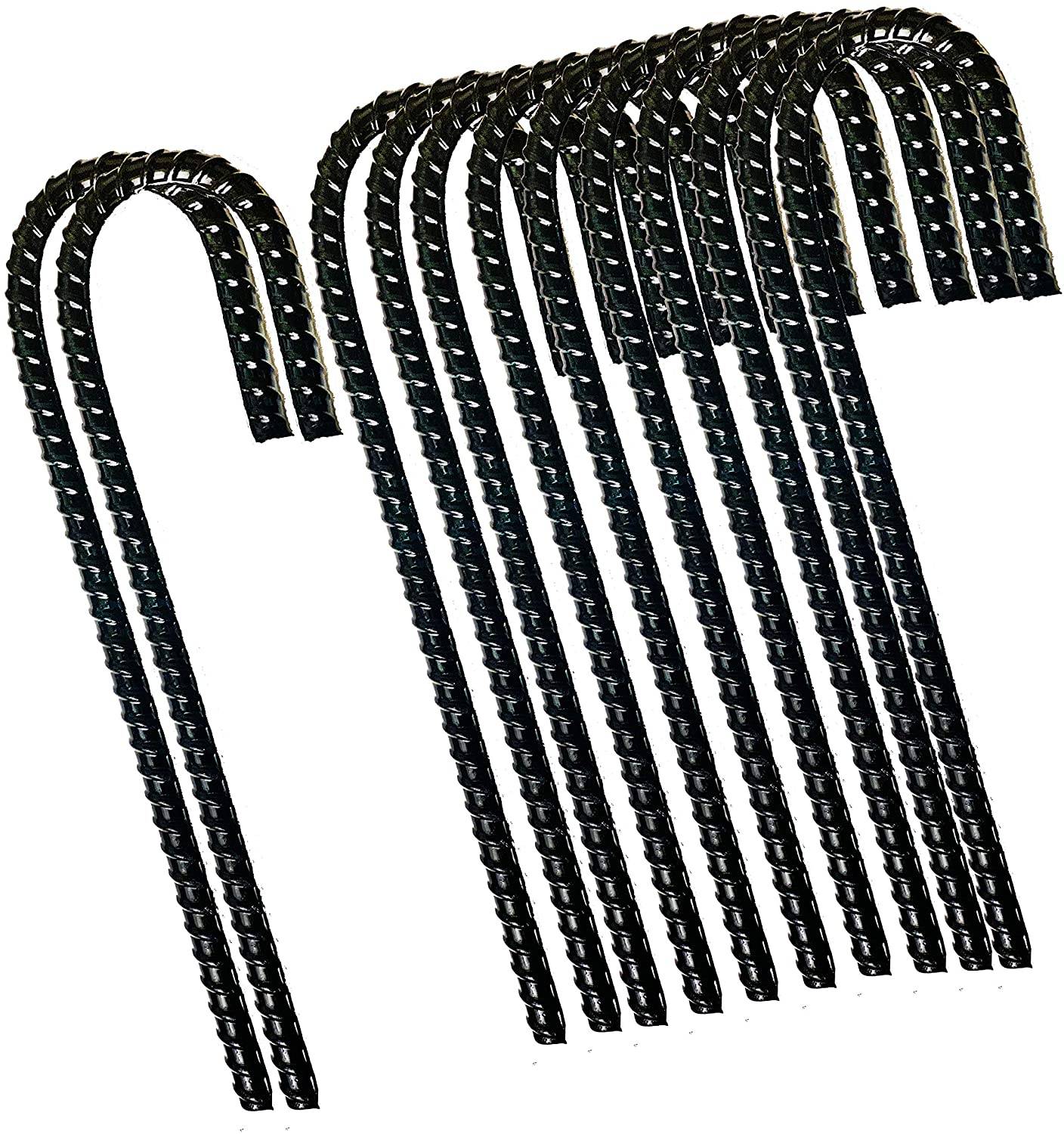
5. Anchor Method: When anchoring with U-shaped nails, ensure that the material and size of the nails meet the requirements, with the anchoring spacing generally being 1 meter, forming a plum blossom pattern.
6. Secure Connections: The connections of the GEOMAT should be secure, with the connection strength in the load-bearing direction not less than the design tensile strength.
7. Tightening and Smoothing: When laying the GEOMAT, it must be tightened and smoothed, nailed down, and closely adhered to the subgrade surface to avoid wrinkles and distortions.
8. Offsetting Seams: When laying multiple layers of geosynthetic materials, the upper and lower seams should alternate, with the offset distance not being less than 0.5 meters.
9. Protective Layer: The GEOMAT should not be laid directly on hard sub-layers such as gravel. A 5cm thick layer of medium to coarse sand should be laid between the geosynthetic materials and the gravel.
10. Avoid Damage: During construction, avoid damaging the coating on the GEOMAT and try to minimize porosity.
11. Compaction: When the thickness of the cushion layer and fill material on the GEOMAT exceeds 0.5 meters, heavy compaction machinery can be used to compact the material densely.
12. Safe Construction: During construction, adhere to safety operation procedures to ensure the safety of construction personnel.
13. Record Keeping: Keep detailed records during construction, including material usage, construction steps, and inspection results, for future reference.
14. Post-Construction Maintenance: After construction, regular inspections and maintenance should be carried out on the GEOMAT to ensure its long-term stability and service life.
By following these points, the quality and effectiveness of the GEOMAT construction can be effectively guaranteed, extending its service life.
ATTACHMENT

MainProducts: Gabion Baskets for Sale, Gabions Supplier, Gabion Mattress manufacturer, Gabion Baskets Manufacturer, Welded Gabion, Custom Gabion Baskets, Gabion Landscaping, Crimped Mesh, Aluminum I Bar Grating, Slope Protection Gabion Mesh
Keywords: Gabion Box, Gabion Retaining Wall, Bastion Barrier Wall, Gabion Wall, Gabion Basket, Road Mesh

 EN
EN